
FindWorker
Live · operated by us
Ours — real workers, real customers, real disputes, real payouts. Workers set their own price; customers choose.
Platforms · Marketplace app development
A marketplace is a platform where customers find and pay providers, and the platform takes a cut. We build the customer app, the provider app and the admin console behind both. It is for founders with two sides to serve; FindWorker, our own home-services marketplace, is where we learned what breaks.
The problem
A marketplace isn't one app, it's three things that have to agree — what the customer sees, what the provider sees, and what you see. Most of the cost is in the parts nobody demos: payouts, disputes, cancellations, and what happens when someone doesn't show up. We run FindWorker ourselves, so those are problems we deal with on our own platform, not ones we have only read about.
None of these? Selling products from many shops rather than booking people's time? Multi-vendor ecommerce is the closer fit.
| Customer app | Search, ordering, tracking, payment, history |
|---|---|
| Provider app | Accept and reject, job management, earnings |
| Admin console | Users, providers, orders, money, disputes |
| Payments | Wallet, gateway, payouts, commission |
| Matching and dispatch | Assignment rules, manual override, live state |
| Refunds and cancellations | Refund flow, cancellation rules, no-show penalties |
| Trust layer | Ratings, reviews, verification, moderation |
| Platforms | iOS, Android and web |
What makes this one hard
Both sides have to be worth showing up for.
A marketplace with providers and no customers dies, and so does the reverse. That is a product decision before it's a technical one, and it's the first thing we'll ask about.
Live · operated by us
Ours — real workers, real customers, real disputes, real payouts. Workers set their own price; customers choose.
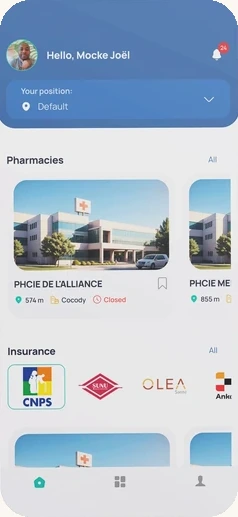
Live · Côte d'Ivoire
Pharmacies, riders, patients, prescriptions and a wallet.
Most projects fail before any code is written — because a price was given before anyone knew what it would cost to build.
If we can't answer these, we quote a phase, not a platform.
Price and phases
Built in phases. You pay per phase.
If phase one doesn't convince you, you stop — and you keep everything we built.
Phase 01
The five questions answered, the build written down, and a named list of what we are not building.
Phase 02
The core of the platform, running, with real data. This is where you decide whether to continue.
Phase 03
The remaining scope in phases of the same shape, then maintenance. Each one priced before it begins.
How long does a marketplace take to build?
A first working version is typically 10–14 weeks after scope, and scope is about a week. That version runs the core loop with real data: a customer books or buys, a provider fulfils it, and you see it in the console. Everything else is a later phase, each priced before it begins. What moves the date most is how much sits in the first phase, so we write down what we are not building as well as what we are.
Read the full guideCan we launch one side first?
Usually yes, and often you should. In most service marketplaces that means supply first: providers sign up, set their price and fill their calendar before customers arrive. We tell you which side and why for yours. Launching one side first also shortens the first phase, because one app and the console are less to build than two apps and the console.
Read the full guideDo we need both apps at launch?
No. We'll tell you which one to build first. Often the side you launch second can start on a simple web page, or be handled by your own team in the admin console, while the other side gets the full app. The console is needed from the first day either way, because it is where you see orders, money and disputes.
Who holds the money in a marketplace?
Either the platform holds it, through a gateway that splits payments or through a wallet, or the provider is paid directly. That choice changes the build, the regulation you fall under, and how you earn. It is the third of our five questions before we quote. We choose the gateway by country and by whether payouts are needed, and we tell you before anything with compliance scope, such as a wallet, goes into the plan.
Read the full guideWhat do you do about no-shows and cancellations?
We build rules for them into the admin console: penalties, ratings and reassignment to another provider. For service marketplaces this goes into the first phase, because it is where trust breaks. We run FindWorker ourselves, so providers not showing up and customers cancelling late are problems we handle on our own platform. The rules are settings you can change, not code you have to pay to rewrite.
Can we take commission?
Yes. Commission can be a percentage, a fixed fee, or a different rate per category, and you change it in the admin console rather than in code. If providers set their own price, as workers do on FindWorker, commission comes out of that price before the payout. How it is collected depends on who holds the money, which we settle during scope.
How do refunds and disputes work?
A refund policy is written in the first phase and built as a flow in the apps and console, not handled by email. The customer raises a dispute in the app, you see both sides and the order history in the console, and the outcome moves money through the same payment records. FindWorker taught us to write the refund flow in phase one, with our own money.
Who owns the code?
You do, on full payment. Exclusive and perpetual.
What if you disappear?
Your repository, your accounts, your signing keys. Documented so another team can pick it up.
Can we move to another team later?
Yes. We write the handover documents that make that possible, whether you use them or not.
Do you take equity instead of cash?
No.
Who holds the app store accounts?
You, unless you ask otherwise. Decided at kickoff, not at launch.
What happens to our data?
It is yours. Exportable at any point, in a format another system can read.
Other platforms we build
No call. A few guided questions, then a tailored quote — usually within one business day.
Or send us the idea in three sentences on WhatsApp, or email support@codingwitht.com.